NewsPublished 7 min read
Brazil's Central Bank sets rules for CPF and CNPJ flagged for Pix fraud
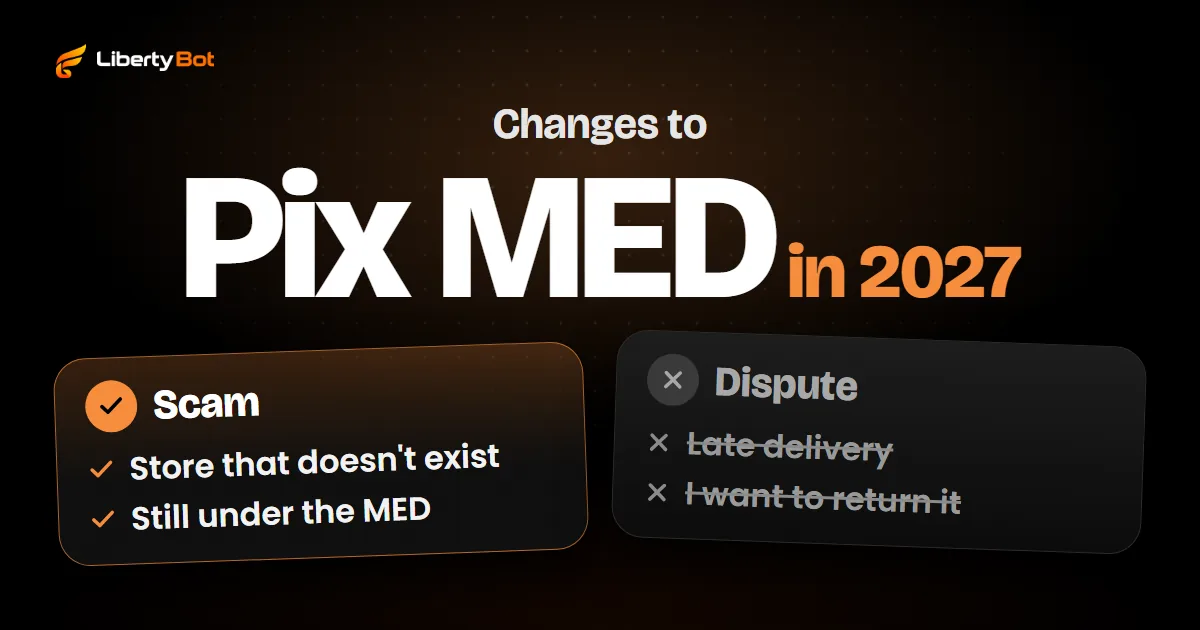
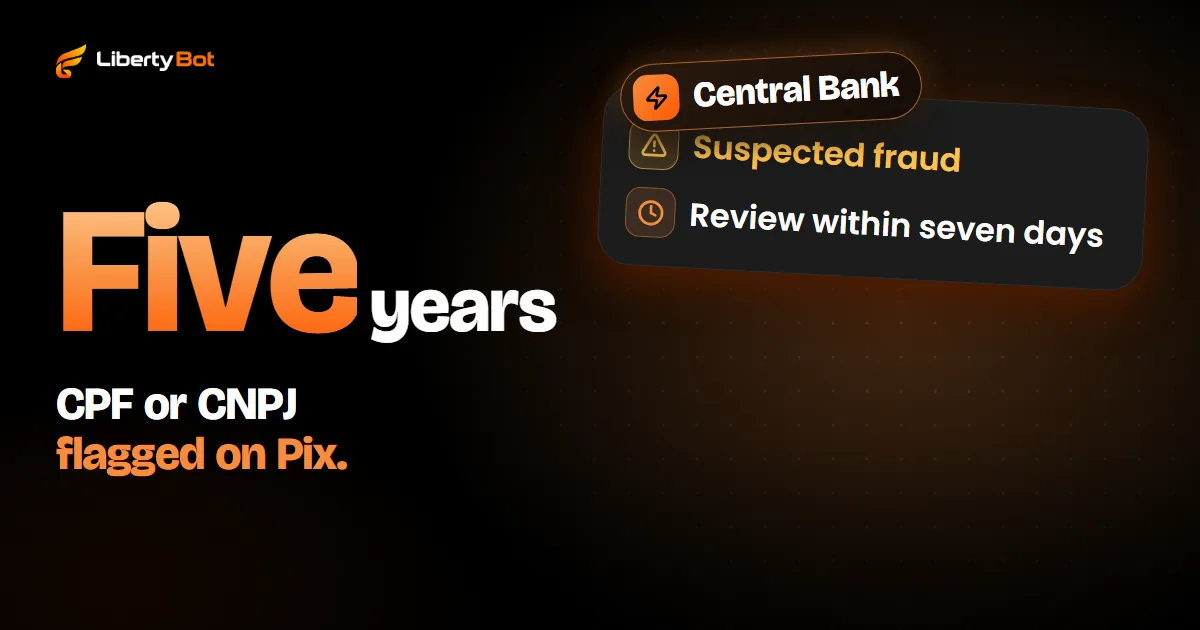
In Brazil, BCB Resolution No. 587, of September 18, 2026, was published in the Federal Official Gazette on September 21. It writes into the Pix rules how a “well-founded suspicion of fraud” flag on a CPF or CNPJ works: who answers for it, five years of duration, a review within seven days and, from February 1, 2027, a mandatory notice to whoever was flagged.
 By LibertyBot TeamLibertyBot Blog
What Brazil's Central Bank changed
In Brazil, the Central Bank (BCB) changed the rules of Pix, the country's instant payment system. The new resolution deals with the flag that a Pix institution (a bank or payment institution) places on the CPF or CNPJ, the Brazilian taxpayer IDs of people and companies, of anyone involved in a Pix with “well-founded suspicion of fraud”. The flag is stored in the DICT, the directory run by the Central Bank that holds the Pix keys linked to each user's data and account.
What the resolution wrote into the Pix rules (quotes translated from Portuguese):
- Who answers for it: the institution that accepted the infraction notice or that created the flag (art. 78-HB).
- How long it lasts: five years, counted from the record in the DICT. The flag is tied to the CPF or CNPJ and also to the Pix key, when the key is in the record (art. 78-HD).
- Review: whoever was flagged can ask for it to be canceled, and the responsible institution has a deadline to decide (how to ask).
- Notice: from February 1, 2027, whoever creates the flag has to notify the user (art. 78-HB, sole paragraph).
The other flag rules have applied since September 21, 2026, the publication date. Only the notice waits until February 2027: according to the vote that proposed the resolution, institutions need to adapt their systems to send it.
The flag isn't new
Since BCB Resolution No. 425, of October 2024, an accepted infraction notice flags in the DICT the Pix keys and the CPF or CNPJ of the person who received the money. Since BCB Resolution No. 506, of September 2025, the institution can also flag its own customer. According to the Central Bank's vote, responsibility for the flag was only in the DICT operating manual, and the five years were already applied by the DICT without being in the regulation.
The reason, according to the vote: the number of user complaints to the Central Bank about wrongful flags and the lack of a standard procedure to contest them. The stated goal is for people flagged without reason to solve the problem “simply and quickly”.
Who flags the CPF or CNPJ
The regulation has two paths, and in both the basis is a well-founded suspicion of fraud:
- Accepted infraction notice. The payer's or the receiver's institution has to open an infraction notice whenever there is a well-founded suspicion that Pix was used for fraud (art. 78-F). If the institution that receives the notice accepts it, the DICT flags the Pix keys and the CPF or CNPJ of whoever received the money (art. 78-G).
- Flag created by the institution. The institution can, on its own, flag the CPF or CNPJ of its own customer involved “in a specific Pix transaction with well-founded suspicion of fraud” (art. 78-HA). Before Resolution 587, that article spoke of a customer “involved in a fraud episode related to a specific Pix transaction”.
In both cases, the institution that accepted or created the flag answers for it and also for canceling it (art. 78-HC). The exception is when the payer's institution cancels the infraction notice or the funds recovery.
What changes for people who sell on Telegram in Brazil
Anyone who sells digital products, subscriptions or paid groups to Brazilian buyers and receives Pix in their own CPF or CNPJ now knows how long a flag weighs and whom to ask for a review. What it does to your account is in the regulation:
- Pix stops at the institution that flagged you. It has to reject every Pix transaction in which the flagged user is the payer or the receiver, and also those of the account involved. Only refunds go through (art. 89, § 2). If your sales land in that account, they stop coming in by Pix there.
- A new Pix key is rejected at that institution. It has to reject the key registration of the flagged user or account and state the reason (art. 56, § 3). It also can't request portability or claim ownership of a key for that user (arts. 68 and 70).
- Other institutions may reject keys. Any Pix institution can reject the key registration of someone with an accepted infraction notice stored in the DICT, stating the reason (art. 56, § 2).
These rules were already in the regulation before Resolution 587, which only adjusted the wording of art. 89, § 2, and of arts. 68 and 70 to “well-founded suspicion of fraud”. The key rejection at the institution that flagged you (art. 56, § 3) was widened: before, it applied only to a flag created by the institution itself and only to the user; now it also applies when the institution accepted the infraction notice, and it reaches the account involved.
How to request a review of the flag
Contact the institution that flagged you
The request goes to it. From February 1, 2027, its notice has to include, at a minimum, the date of the flag, the possibility of a review and the channel for questions and for requesting the review.
Ask for the cancellation
The responsible institution has to make sure whoever was flagged can request the cancellation (art. 78-HC, § 1). The resolution doesn't list documents. Send whatever shows the sale was real: what you sold, proof of delivery and the conversation with the buyer.
Count the seven days
The institution decides whether to keep or cancel the flag within seven days of receiving the request (art. 78-HC, § 2).
Know when cancellation is mandatory
If, after the analysis, nothing is left that justifies the suspicion, the flag has to be canceled. The institution keeps a record of the reasons for its decision (art. 78-HC, §§ 3 and 4).
What's in the seller's hands
The institution decides on the flag, and no conduct guarantees it won't come. What's in your hands is not giving the buyer a reason to think they fell for a scam:
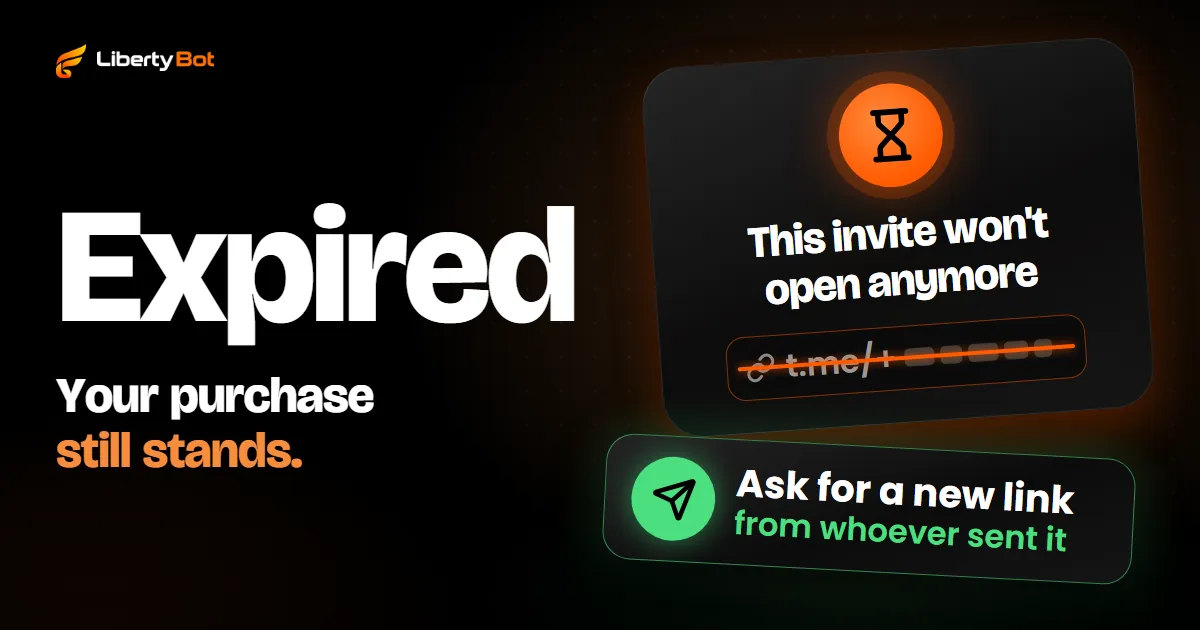
- Deliver what you sold, right after payment. If access is a group, send the invite right away. If it expires before the person joins, send another: see what to do when an invite link expires.
- Say in the offer what the person gets and for how long. No surprises after the Pix.
- Answer whoever writes. Keep a support contact in plain sight and answer questions from people who paid.
- Keep the evidence. The order record, the proof of delivery and the conversation. That's what you have to show if you need to request a review.
On LibertyBot
LibertyBot doesn't flag anyone or remove anyone's flag: under the resolution, that's up to the responsible institution. What it does on every Pix sale:
- The Pix charge is created in the seller's account, at the gateway they connected under Gateways in the dashboard menu, and the money from the sale lands in that account. LibertyBot doesn't receive the amount to pass it on later.
- When the gateway reports the payment, LibertyBot checks with the gateway and only marks the sale as paid if the gateway confirms it. If the amount or currency it reports doesn't match the order, the sale isn't confirmed. Access is then delivered automatically.
- Every bot has /status and /suporte in its menu. /status shows the buyer whether their access is active, and /suporte shows the contact you add in the flow's @ Support field, in the Bots section.
To set up the whole sale, from payment to removal at expiry, see how to create a VIP group on Telegram.
Frequently asked questions
How long does a Pix fraud suspicion flag last?
Five years, counted from the date of the record in the DICT, under BCB Resolution No. 587.
How long does the bank have to answer a review request?
Up to seven days from receiving the request. Without evidence to support the suspicion, the flag has to be canceled.
Does the bank have to tell me it flagged my CPF?
Yes, from February 1, 2027. The notice has to include the date of the flag, the possibility of a review and the channel for requesting it.
Can LibertyBot remove the flag from my CPF?
No. Under the resolution, the institution responsible for the flag is the one that creates and cancels it.
Sources (checked on )
- Central Bank of Brazil: BCB Resolution No. 587, of September 18, 2026 (in Portuguese) (opens in a new tab)
- Central Bank of Brazil: BCB Vote 105/2026, which proposed Resolution 587 (in Portuguese) (opens in a new tab)
- Central Bank of Brazil: Pix Regulation with its amendments, BCB Resolution No. 1 (in Portuguese) (opens in a new tab)
- Central Bank of Brazil: BCB Resolution No. 506, of September 26, 2025 (in Portuguese) (opens in a new tab)